
Japanese Woodblock Prints

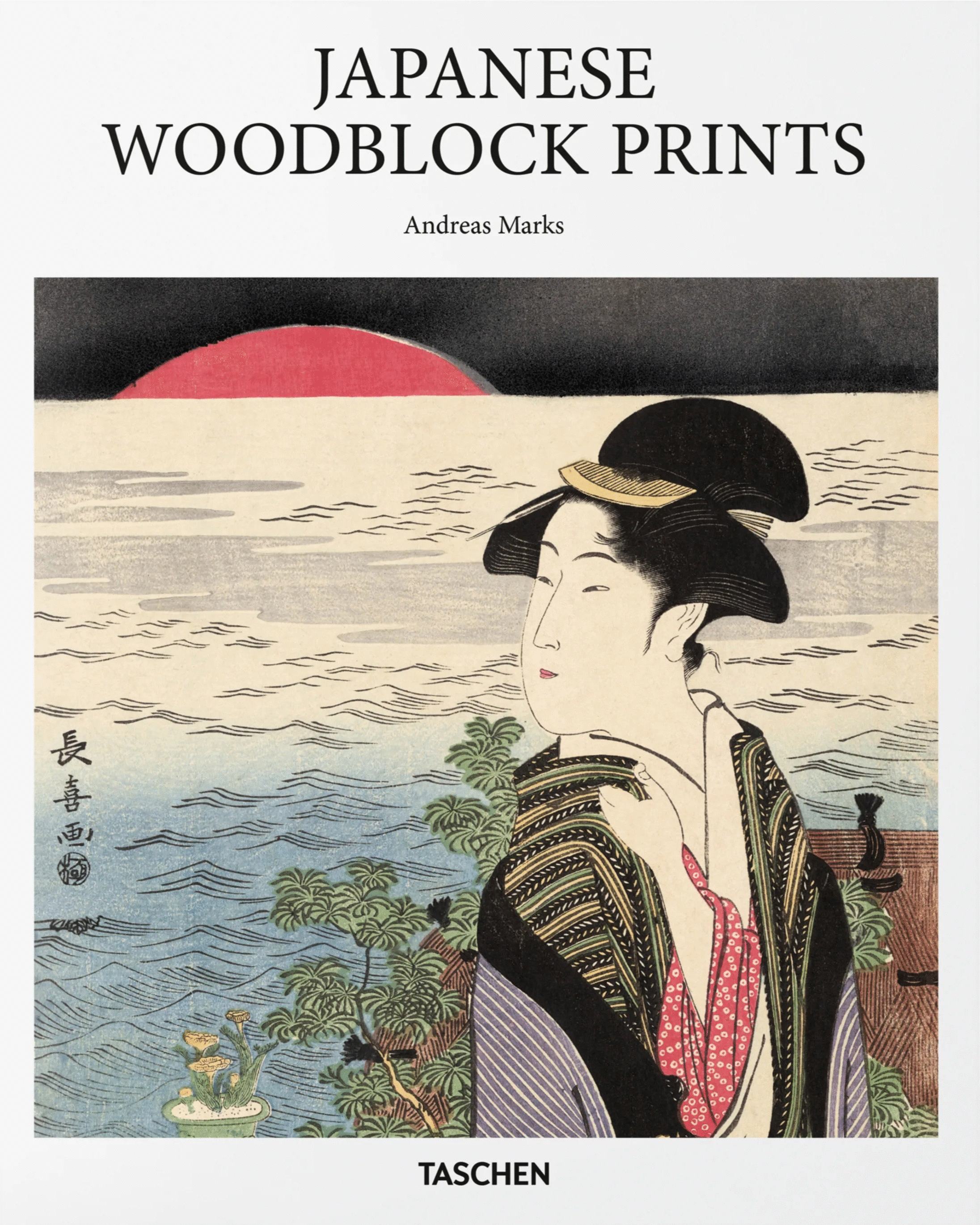
Japanese Woodblock Prints

Marks, Andreas

$360.00 MXN

Sinopsis

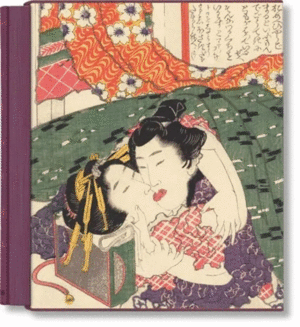
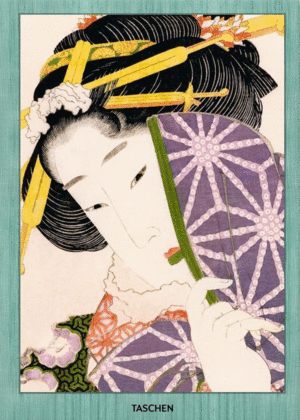
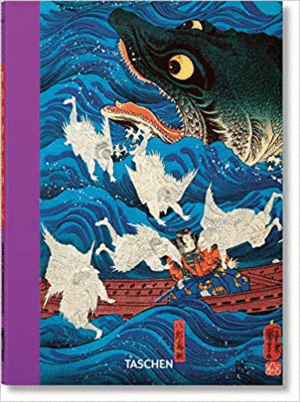
From Edouard Manet’s portrait of naturalist writer Émile Zola sitting among his Japanese art finds to Van Gogh’s meticulous copies of the Hiroshige prints he devotedly collected, 19th-century pioneers of European modernism made no secret of their love of Japanese art. In all its sensuality, freedom, and effervescence, the woodblock print is single-handedly credited with the wave of japonaiserie that first enthralled France and, later, all of Europe?but often remains misunderstood as an “exotic” artifact that helped inspire Western creativity.

The fact is that the Japanese woodblock print is a phenomenon of which there exists no Western equivalent. Some of the most disruptive ideas in modern art?including, as Karl Marx put it, that “all that is solid melts into air”?were invented in Japan in the 1700s and expressed like never before in the designs of such masters as Hokusai, Utamaro, and Hiroshige in the early 19th century.

This volume lifts the veil on a much-loved but little-understood art form by presenting the most exceptional Japanese woodblock prints in their historical context. Ranging from the 17th-century development of decadent ukiyo-e, or “pictures of the floating world,” to the decline and later resurgence of prints in the early 20th century, the images collected in this edition make up a record not only of a unique genre in art history, but also of the shifting mores and cultural development of Japan.

We discover the four pillars of the woodblock print?beauties, actors, landscapes, and bird-and-flower compositions?alongside depictions of sumo wrestlers, kabuki actors, or enticing courtesans?rock stars who populated the “floating world” and whose fan bases fueled the frenzied production of woodblock prints. We delve into the horrifying and the obscure in prints where demons, ghosts, and otherworldly creatures torment the living?stunning images that continue to influence Japanese manga, film, and video games to this day. We witness how, in their incredible breadth, from everyday scenes to erotica, the martial to the mythological, these works are united by the technical mastery and infallible eye of their creators and how, with tremendous ingenuity and tongue-in-cheek wit, publishers and artists alike fought to circumvent government censorship.

This edition compiles the finest extant impressions from museums and private collections across the globe, accompanied by descriptions to guide us through this frantic period in Japanese art history.

Editorial:
Taschen
Año de edición:
2024
Materia
Historia del arte
ISBN:
978-3-8365-8554-5
Páginas:
96
Encuadernación:
Pasta dura
Idioma:
Inglés

Disponibilidad en Centros

  • Condesa
  • Polanco
  • Santa Fe
  • Perisur
  • Zona Rosa
  • Roma
  • San Ángel

Advertencia: Las existencias de nuestro sistema no son precisas al 100%, por lo que antes de dirigirte a una de nuestras sucursales, te recomendamos que llames por teléfono para confirmar su disponibilidad.
Comentarios


Añadir comentario

Otros libros del autor

  • Japanese Woodblock Prints: 40th...
    Marks, Andreas
    Del retrato que hizo Edouard Manet del escritor naturalista Émile Zola ante una estampa japonesa a las meticulosas copias de los grabados de Hiroshige que Van Gogh coleccionó con devoción, los pioneros del modernismo europeo del siglo XIX no ocultaron su amor por el arte japones. En toda su sensualidad, libertad y efervescencia, la xilografía es el ejemplo por antonomasia de la...

    $539.00 MXN

    En stock
  • Hiroshige & Eisen
    Marks, Andreas
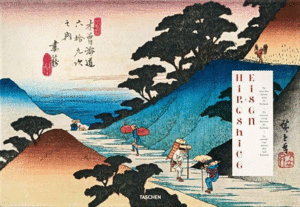
    The Kisokaido route through Japan was ordained in the early 1600s by the country's then-ruler Tokugawa Ieyasu, who decreed that staging posts be installed along the length of the arduous passage between Edo (present-day Tokyo) and Kyoto. Inns, shops, and restaurants were established to provide sustenance and lodging to weary travelers. In 1835, renowned woodblock print artist K...

    $6,402.00 MXN

    No disponible

Libros relacionados

  • Ladrones de arte
    Trigo, Ana
    Casi tan antiguos como la propia humanidad, los robos de arte se remontan hasta los orígenes de los primeros grandes imperios. Desde entonces, nos fascinan y repelen por igual, pero, ¿qué se esconde tras ellos? ¿Por qué se roba el arte? ¿Qué ocurre con las piezas robadas? ¿Existen realmente los robos por encargo? ¿Cómo funciona el mercado negro del arte? Encontraremos respuesta...

    $399.00 MXN

    En stock
  • Civilización
    Los objetos dicen mucho de una civilización, nos cuentan cómo vivían nuestros antepasados, en qué creían y qué valorabanLos objetos que dejamos atrás dicen mucho sobre nuestro pasado, dándonos un conocimiento mucho más rico e intrigante sobre la vida de nuestros ancestros que una simple lista de sucesos.Civilización expone un tesoro escondido de fascinantes artefactos –desde la...

    $1,099.00 MXN

    En stock
  • 50 cosas que hay que saber sobre arte
    Hodge, Susie
    ¿Cuál es la diferencia entre una pintura del barroco y una del rococó? ¿A qué movimiento pertenecen Los Nenúfares de Monet y Los Girasoles de Van Gogh?50 cosas que hay que saber sobre arte es una perfecta introducción al conocimiento sobre movimientos, simbología y artistas más destacados de la historia del arte. Un libro indicado para aquellos incapaces de discernir entre un D...

    $249.00 MXN

    En stock
  • Arte de entender el arte, El
    Bryan, Kate
    Un acercamiento al caprichoso mundo artístico para que todos podamos disfrutarlo.¿Qué es el arte, dónde puedo encontrarlo? Cuando lo tengo delante ¿cómo se supone que debería mirarlo?Kate Brian es una adicta confesa al arte y lleva más de veinte años trabajando en el sector. Sin embargo, antes de ponerse a estudiar Historia del Arte en la universidad, solo había estado en una g...

    $469.00 MXN

    En stock
  • Book of Citrus Fruits, The: 45th...
    Lauterbach, Iris
    J. C. Volkamer’s 18th-century ode to the citrus fruitHave you ever thought of citrus fruits as celestial bodies, angelically suspended in the sky? Perhaps not, but J. C. Volkamer (1644–1720) did—commissioning an extravagant and breathtaking series of large-sized copperplates representing citrons, lemons, and bitter oranges in surreal scenes of majesty and wonder.Ordering plants...

    $539.00 MXN

    En stock
  • Huir del mundo
    Chancho, Rosa
    El colectivo Rosa Chancho irrumpe en 2005 en la ciudad de Buenos Aires con un conjunto de operaciones que irradiaban curiosidad crítica por la acelerada expansión del campo vernáculo de las artes visuales. Su nombre encarna una toma de posición frente a los discursos polarizados de la escena local, en la que aún resonaba la controversia entre el “arte rosa light” (decorativo o ...

    $416.00 MXN

    En stock